
What actually causes damage, and how to avoid it
If you've got fine or thinning hair, there's a good chance this question has stopped you from trying extensions at all: will these make it worse?
It's a fair worry, and we're not going to tell you it's never a risk, because it can be, depending on the product and how it's worn. Here's the honest version of what actually causes damage, and what doesn't.
What actually causes damage
Extension damage almost always comes down to weight and tension, not the extensions themselves. A few specific things cause the most harm:
Too much weight on too little hair. Wide, heavy wefts built for thick hair put real strain on strands that were never meant to carry that load. Over time, that pull can weaken hair at the root.
Clips placed in the wrong spot. Clips positioned right at the hairline or on already-fragile sections take the brunt of the tension. That's often where traction alopecia, gradual hair loss from repeated pulling, actually starts.
Wearing them too long without a break. Sleeping in clip-ins or leaving them in day after day doesn't give your hair or scalp any recovery time.
Rough removal. Yanking clips out instead of releasing them properly can take strands with them, especially if hair's already fine or fragile.
None of these are reasons to avoid extensions altogether. They're reasons to be specific about what you're choosing and how you're wearing them.
What actually lowers the risk
Lighter clips, fewer of them. Fewer, well-placed, lightweight clips put less overall strain on your hair than a dozen heavy ones spread across a wide track.
Narrower wefts. A slim weft distributes weight more evenly and doesn't concentrate pressure on one section the way a bulky one does.
Placement away from the most fragile areas. Keeping clips clear of your hairline and any noticeably thin patches matters more than most people realize.
Taking them out at the end of the day. Clip-ins are designed to come in and out, not to be worn around the clock. Giving your hair a break overnight is a simple habit that makes a real difference.
When to hold off
If you're dealing with active, rapid hair loss rather than general thinning, that's worth a conversation with a doctor before adding any extensions, clip-in or otherwise, since added weight on hair that's already shedding heavily isn't going to help. That's not us trying to talk you out of a purchase. It's just the honest answer.
What we did with this in mind
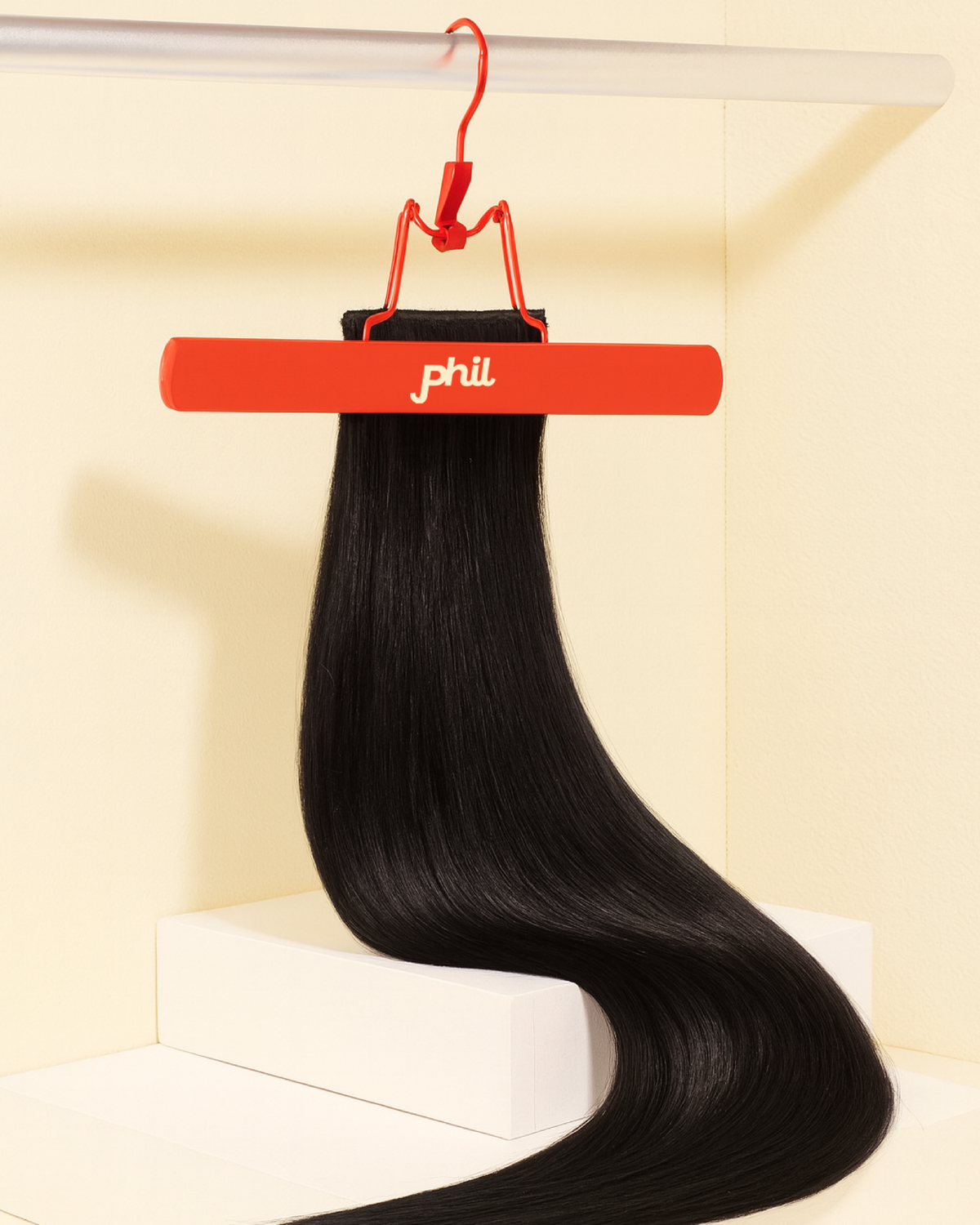
This is exactly why Natalie and I spent a year testing before The Full Phil became a real product. We built it with a narrower weft and fewer, lighter clips than what's typically on the market, specifically because we were testing it on our own thinning hair the whole time. If it pulled too much or felt heavy after a few hours, it went back to the drawing board.
Extensions aren't inherently risky for fine or thinning hair. Poorly designed ones are. The difference is in the details, weight, weft width, clip placement, not in extensions as a category. We have also been adding other products to our range for women who don't want to wear clip-ins, so check out our entire product pages to see if anything else suits you best :)
If you're still not sure, reach out and ask us directly. We'd rather talk you through it honestly than have you guess.

Leave a comment
This site is protected by hCaptcha and the hCaptcha Privacy Policy and Terms of Service apply.